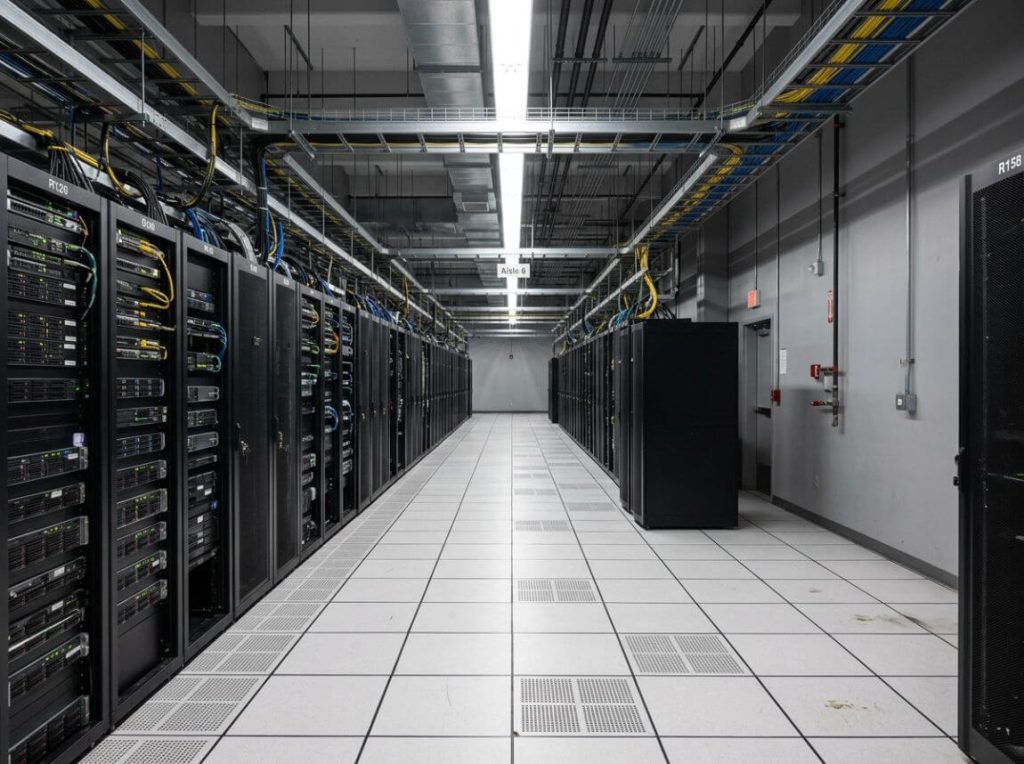
Colocation pricing has done something it hadn’t done in 15 years: gone up, and stayed up. CBRE put the average asking rate for 250 to 500kW deployments in primary North American markets at $195.94 per kW per month in the second half of 2025, a 6.5% year-over-year increase, with vacancy at a record-low 1.4%. datacenterHawk has tracked a 17% rise in global average rates over the past five years. Power-constrained hubs are running tighter still, with double-digit percentage increases in places like Northern Virginia.
That has not eliminated the room to negotiate. It has narrowed where the room actually is. Below are the contract terms that still move, where the operator is most likely to push back, and what tenants outside the hyperscaler tier should be focused on before signing.
Power commit, ramp schedule, and the gap between them
Pricing in any meaningful deployment runs on dollars per kilowatt per month, but the document that actually controls the bill is the ramp schedule: when the tenant starts paying for committed power versus when the racks are actually drawing it. A typical customer’s ramp-up to full capacity takes several months, and operators have flexibility to abate or discount the license fee during that window. A 60 to 90 day abatement followed by a discounted rate through the first 12 months is a structure worth pushing for, and one that operators in a sellers’ market will still concede on, because it doesn’t reduce their long-term contracted revenue.
Just as important is what “committed power” means. Most agreements define it as average monthly consumption against a cabinet or cage draw cap, with overuse beyond an allowed buffer triggering a renegotiation demand or, in some contracts, the right to de-energize equipment. For tenants running AI training workloads with spiky utilization, that definition matters more than the headline rate. Negotiate the peak-to-average ratio explicitly; do not accept a single number.
Pass-through power and escalators
Flat-rate power, once a selling point, is now rare; most deals pass utility costs through, and pricing tied to CPI or power indices is common. That shift puts the entire merchant power risk on the tenant, and it is the single biggest reason five-year-old TCO models are now wrong.
Annual escalators on the recurring rent component typically range from 2.5% to 5%. WhiteFiber’s recent 10-year, 40MW deal with Nscale at the NC-1 campus in Madison, North Carolina is a useful reference point for what a 2025-vintage long-term agreement looks like: approximately $865 million in contracted revenue, including contractual annual rate escalators and non-recurring installation, but excluding electricity and certain other pass-through costs. Read the structure carefully. The headline TCV says one thing; the escalator curve compounded against an index-linked power charge can say something quite different by year seven.
Where there is leverage: cap escalators in absolute terms, not just percentage terms; tie any power index to a published, auditable benchmark rather than the operator’s blended cost; and require utility bill pass-through with documentation, not a marked-up administrative rate.
The SLA is the contract
Tenants spend most of their negotiating energy on price and almost none on the service level agreement, which is where the actual operational protection lives. Standard published SLAs are deceptively thin. Equinix’s colocation SLA, for example, distinguishes redundant power at 99.999%+ availability (under five minutes of unavailability over 12 months per cabinet) from non-redundant power at 99.99%+ (under 52 minutes over 12 months), with credits calculated as fractions of the loaded cabinet monthly recurring charge. Switch’s contract template makes the same logic explicit: 100% power availability applies only if the customer properly deploys dual-feed A and B power; equipment not using both does not receive service credits.
Three things to push on. First, how unavailability is measured. A redundancy failure that takes one feed offline for an hour but doesn’t drop the cabinet is often excluded from credits, even though it eliminates the redundancy the tenant is paying for. Second, the cap on remedies. Service credits are typically capped at a small percentage of monthly fees, and planned maintenance windows may not count against uptime guarantees. Negotiate the cap upward, and limit the exclusions list. Third, the environmental SLAs around temperature and humidity, which matter more as densities climb. Common bands run 64 to 78°F and 40% to 60% relative humidity; high-density GPU deployments may need tighter bounds.
Expansion, right of first refusal, and the price of growing
In a market with 1.4% vacancy, the contract term that quietly determines whether a tenant can grow is the expansion right. Without a defined expansion clause, additional power requirements after signing put all the leverage back with the operator. A workable expansion right specifies the additional power the operator commits to without reserve fees, fixes the price per kW, and gives the tenant a defined window (commonly up to 12 months) to exercise. A reciprocal give-back provision, allowing the tenant to release a percentage of committed power back to the operator if forecasts come in soft, is harder to win but worth asking for.
Right-of-first-refusal language on contiguous space is the other instrument. Tenants signing into a partially built campus should not assume future phases will be available; they should require it.
Cross-connects, smart hands, and ancillary fees
Cross-connect pricing is where bills quietly inflate. TRG Datacenters notes that cross-connect fees can range from $100 to $400 each, and a tenant paying $1,000 per rack can easily exceed the rack cost with three cross-connects. Equinix bundles non-recurring install fees and early-termination charges into cross-connects under the same term length as the colocation agreement. Negotiate a fixed allotment of cross-connects in the base agreement, lock in pricing for incremental ones, and require carrier-neutral access without the operator’s preferred routing.
Smart hands, remote hands, monitoring, environmental reporting surcharges, and property-tax pass-throughs each deserve a line item review.
Relocation, renewal, and exit
Operators routinely reserve relocation rights. Switch’s CFA, for instance, allows the operator to require equipment relocation on 180 days’ notice (or in an emergency), provided the new space affords comparable square footage, power, cabling, and environmental conditions. “Comparable” does the work in that clause. Tenants should define what comparability means, require operator-funded migration, and negotiate service credits during the move.
Renewal mechanics deserve the same scrutiny as the initial term. Renewal outcomes depend on re-checking power needs, confirming density flexibility, validating cross-connect and one-time fees, and matching the term to how the site is actually being used. Auto-renewal clauses on month-to-month rollover terms should never be left at default; build in a notice window and a market-reset provision.
What to watch
The leverage equation does not look likely to shift in tenants’ favor in the next 18 months. Supply chain improvements and grid upgrades will take years to resolve, AI demand remains volatile, and the sellers’ market is expected to continue through late 2025 and early 2026. Power-delivery timelines now stretch 2 to 3 years minimum in most markets, and Japan faces a 9 to 10 year waitlist. For mid-sized enterprises in particular, 5 to 7 year term commitments are now the norm, with 10% to 15% rate increases over prior cycles.
The terms that move in this environment are not the headline rate. They are the ramp schedule, the SLA exclusions, the escalator structure, the expansion clause, and the long list of pass-throughs and ancillary fees that compound into real money over a seven-year deal. Customers who treat colocation contracts like commercial real estate leases (where, by one estimate, 85% of deals use outside expertise versus roughly 30% in data center procurement) tend to find the leverage.