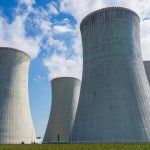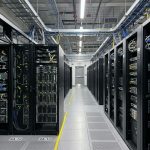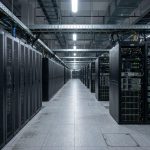
Every major US hyperscaler has now signed at least one nuclear power deal, and the combined commitments have moved past 9.7GW of contracted or planned capacity, according to a tracker maintained by SMR Intel. The logic behind the rush is straightforward: AI training clusters need round-the-clock, carbon-free power at gigawatt scale, and almost nothing else on offer fits all three requirements at once.
The clearest signal came in September 2023, when Constellation Energy signed a 20-year power purchase agreement with Microsoft to restart Unit 1 of Three Mile Island, since rebranded the Crane Clean Energy Center. The plant is expected to deliver 835MW of baseload power to Microsoft’s regional operations from 2027, with a Department of Energy loan of roughly $1 billion closed in November 2025 to support the work. Meta followed with a 20-year agreement to take power from Constellation’s Clinton Power Station in Illinois starting in 2027, then expanded its nuclear footprint in January with deals across TerraPower, Oklo, Vistra, and Constellation that could unlock up to 6.6GW by 2035. Google has committed to 500MW from Kairos Power’s KP-FHR reactors. Amazon, in addition to a $700 million investment in X-energy, restructured its arrangement with Talen Energy in June 2025 into a 17-year, $18 billion PPA for up to 1,920MW from the 2,475MW Susquehanna nuclear plant in Pennsylvania.
What’s actually driving the deals
Three things, mostly. First, AI capex plans keep climbing. Microsoft has surpassed Amazon as the largest corporate buyer of clean power, with 34.7GW under contract as of late September 2025, according to S&P Global. US data centers have now contracted more than 80GW of clean energy in total, roughly 30GW more than S&P estimated a year earlier. Second, the existing wind, solar, and storage stack cannot deliver firm baseload at the scale and capacity factor a training cluster needs without either co-located gas backup or a great deal of overbuilding. Third, hyperscalers want carbon-free megawatts that they can credibly book against their corporate climate commitments, and grid-served renewable PPAs are increasingly contested as a substitute for real, on-system decarbonization.
Nuclear answers all three points, with one important caveat: most of it is not available yet.
The restart trade versus the SMR bet
The deals fall into two distinct buckets, with very different risk profiles.
Restarts and uprated existing plants (Three Mile Island, Clinton, Susquehanna, Palisades) use proven light-water technology and existing interconnections. These are the only nuclear megawatts hyperscalers can realistically expect before 2030. Microsoft’s Crane project, Meta’s Clinton offtake, and Amazon’s Susquehanna PPA all sit in this category. They are expensive, but the timeline risk is bounded.
Small modular reactors are the longer bet. Amazon’s X-energy Xe-100 project with Energy Northwest, Google’s Kairos deal, Meta’s TerraPower Natrium and Oklo Aurora deals, and Oracle’s announced 1GW SMR-powered campus all depend on technology that is, in commercial terms, not yet built. As of early 2026, only four SMR units operated commercially anywhere in the world, all at Russia’s Akademik Lomonosov floating plant and China’s Linglong One demonstration reactor, according to data tracked by the World Nuclear Association. The Department of Energy still describes US commercial SMR deployment as a late-2020s to early-2030s proposition. The Nuclear Innovation Alliance puts most non-light-water designs into the 2030s. Build.inc, advising developers on nuclear-adjacent siting, has warned bluntly that sites which pencil only if SMRs arrive on schedule “are not investment-grade bets in 2026.”
That gap between announcement and reality matters for site selection. A developer pitching a campus on the promise of an SMR coming online in 2030 is selling timeline optionality, not power.
The FERC problem
The other complication is regulatory. In November 2024, FERC rejected an amended interconnection service agreement that would have let Talen Energy expand behind-the-meter sales from Susquehanna to Amazon’s adjacent campus from 300MW to 480MW. The commission’s 2-1 ruling reflected concerns that pulling existing baseload capacity directly out of the grid for one customer could shift costs to other ratepayers and degrade reliability. PJM’s December 2025 capacity auction, which fell 6,623MW short of its reliability target with data centers responsible for nearly 5,100MW of the demand surge, did nothing to ease those concerns.
A week after that auction, on December 18, 2025, FERC issued a unanimous order directing PJM to establish formal rules for data center co-location, including three new transmission service options and reformed behind-the-meter rules with compliance deadlines starting in January. The Talen-Amazon deal, restructured to flow Susquehanna’s 1,920MW through the grid rather than direct to the campus, is now the template the order effectively legitimizes. The unresolved question is whether the same logic survives political turnover at the commission and the inevitable appellate review.
What to watch
The near-term inflection points are concrete. Crane Clean Energy Center’s actual return to service, currently targeted for 2027, will test whether restart economics work as advertised; the plant is already roughly 80% staffed. PJM’s compliance filing under the December FERC order will determine how much of the co-location model the rest of the industry can actually replicate. And the first SMR criticality milestones, including Kairos Power’s Hermes test reactor and Aalo’s experimental Aalo-X (targeting July 2026), will either validate or extend the timeline assumptions baked into Meta’s, Amazon’s, and Google’s longer-dated commitments.